
For decades, the standard relationship between a business and its IT department was defined by the “Break-Fix” model. Something would stop working—a server would crash, a hard drive would fail, or a network switch would overheat— and a frantic call would be made to a technician. While Managed Services (MSPs) improved this by introducing 24/7 monitoring, the core philosophy remained largely the same: detect a failure and fix it as fast as possible.
As we move through 2026, that model is officially obsolete. In a world where downtime costs for small-to-medium businesses can exceed $5,000 per minute, “fast” is no longer good enough. The gold standard has shifted to Predictive Maintenance, powered by AI-driven telemetry and machine learning.

The Death of the "Surprise" Outage
Reactive repair is inherently expensive. It involves emergency labor rates, rushed shipping for replacement parts, and, most importantly, the lost productivity of your staff. Predictive maintenance, by contrast, treats your IT infrastructure like a living organism.
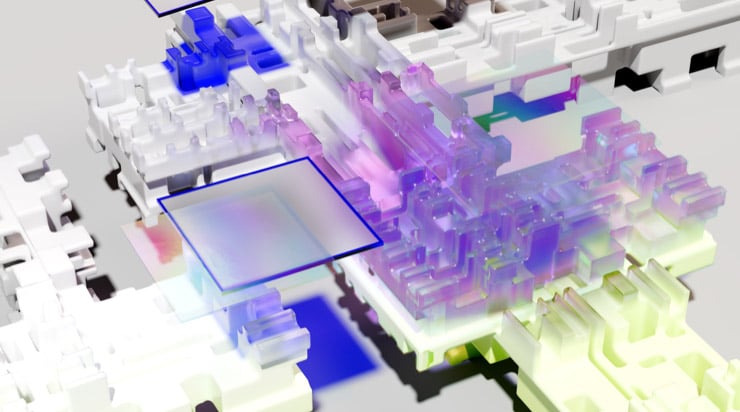
By utilizing Digital Twin technology—a virtual replica of your physical network—modern MSPs can run simulations and analyze data patterns to spot “silent” indicators of failure. These aren’t just simple alerts that a CPU is running hot; they are sophisticated algorithms that recognize a specific vibration pattern in a cooling fan or a microscopic increase in data packet re-transmission that historically precedes a hardware collapse.
How Predictive Maintenance Works in 2026
The process relies on three distinct layers of technology:
Sensor Proliferation & IoT: Every modern laptop, server, and UPS (Uninterruptible Power Supply) now comes equipped with hundreds of internal sensors. These sensors feed real-time data into an MSP’s central “Brain.”
Pattern Recognition (The “ML” Layer): The system compares your hardware’s behavior against millions of other devices globally. If a specific batch of SSDs (Solid State Drives) is known to fail after 14,000 hours of use under high-stress database loads, the system flags your drive at 13,500 hours.
Automated Logistics: Once a potential failure is identified, the system doesn’t just send an email. It can automatically check warranty status, verify parts inventory, and schedule a technician to swap the hardware during a scheduled maintenance window—weeks before the device actually dies.
The Real ROI: Beyond the Repair Bill
When calculating the Return on Investment (ROI) for a predictive IT model, businesses often look at the wrong numbers. The value isn’t just in a cheaper repair; it’s in the elimination of the “Ripple Effect.”
When a core switch fails reactively, it doesn’t just stop one person from working. It halts the warehouse scanners, prevents the sales team from accessing the CRM, and stops the accounting department from processing invoices. The “Ripple Effect” turns a $500 hardware failure into a $50,000 operational catastrophe.
With predictive maintenance, the “repair” happens at 2:00 AM on a Tuesday. The hardware is swapped, the configuration is mirrored, and when your staff logs in at 9:00 AM, they have no idea a crisis was averted. This is the Zero-Downtime Enterprise—the ultimate goal of 2026 IT consultancy.
Strategic Asset Lifecycles
Finally, predictive maintenance allows for better financial planning. Instead of being hit with a $20,000 “emergency” hardware refresh because half your fleet decided to die in the same quarter, consultants can provide a 24-month roadmap based on actual wear-and-tear data. This allows CFOs to move IT costs from unpredictable CapEx (Capital Expenditure) to steady, predictable OpEx (Operating Expenditure).
Conclusion
In 2026, if you are waiting for something to break before you fix it, you are already behind your competitors. Predictive maintenance isn’t a luxury; it’s a prerequisite for any business that relies on digital continuity.
The shift from “How fast can you fix it?” to “Why didn’t I even know it was failing?” is the hallmark of a truly managed IT environment.